
Tracking Together: How Partners Can Share Baby Care with Babylitics

On this page
- The Communication Problem
- How Shared Tracking Changes the Dynamic
- 1. No More "Did You Already...?" Questions
- 2. Fair Workload Visibility
- 3. Smoother Handoffs
- 4. Consistent Pediatric Visits
- Setting Up Shared Tracking in Babylitics
- Step 1: Invite Your Partner
- Step 2: They Accept the Invitation
- Step 3: Both Parents Track
- Who Logged What? The Recorder Badge
- Practical Tips for Partner Tracking
- Agree on What to Track
- Use the Same Conventions
- Don't Use Tracking as a Scorecard
- Take Advantage of the Dashboard
- Beyond Partners: Extending to Your Care Team
- Frequently Asked Questions
It's 3am. The baby is crying. You nudge your partner: "Did you do the last feeding?" They mumble something half-asleep. Neither of you remembers. Sound familiar?
One of the biggest sources of stress for new parents isn't the baby — it's the coordination. Who fed last? When did the diaper get changed? How long was the nap? When both parents are sleep-deprived and running on autopilot, things slip through the cracks.
A shared baby tracker turns guesswork into data — and gives both parents the same view of what's happening.
The Communication Problem
New parents face a coordination challenge that no amount of love or good intentions can solve: information asymmetry. When one parent is at work and the other is home with the baby, the working parent comes home with zero context. When parents take shifts at night, handoffs are messy. When a grandparent or nanny helps during the day, nobody has the full picture.
65% of parents in two-parent households say that sharing parenting responsibilities is somewhat or very difficult to navigate, with communication about daily routines cited as a top challenge.
The result is predictable: duplicate feedings or missed feedings, conflicting information at pediatric visits, and low-grade friction between partners who are both doing their best but working from incomplete information.
How Shared Tracking Changes the Dynamic
When both parents log to the same tracker, several things change immediately:
1. No More "Did You Already...?" Questions
Every feeding, diaper change, sleep session, and temperature check is logged with a timestamp and the name of who recorded it. When you open the app, you can see at a glance what happened while you were asleep, at work, or in the shower.
No more texting your partner to ask. No more duplicate feedings because nobody was sure. The data is just there.
2. Fair Workload Visibility
Parenting workload is notoriously invisible. One parent might feel like they're doing "everything" while the other feels the same way. Tracking makes the work visible — not to score points, but to have honest conversations.
When you can see that one parent logged 6 of 8 overnight diaper changes this week, it's easier to say "Let me take tonight" without anyone feeling accused.
3. Smoother Handoffs
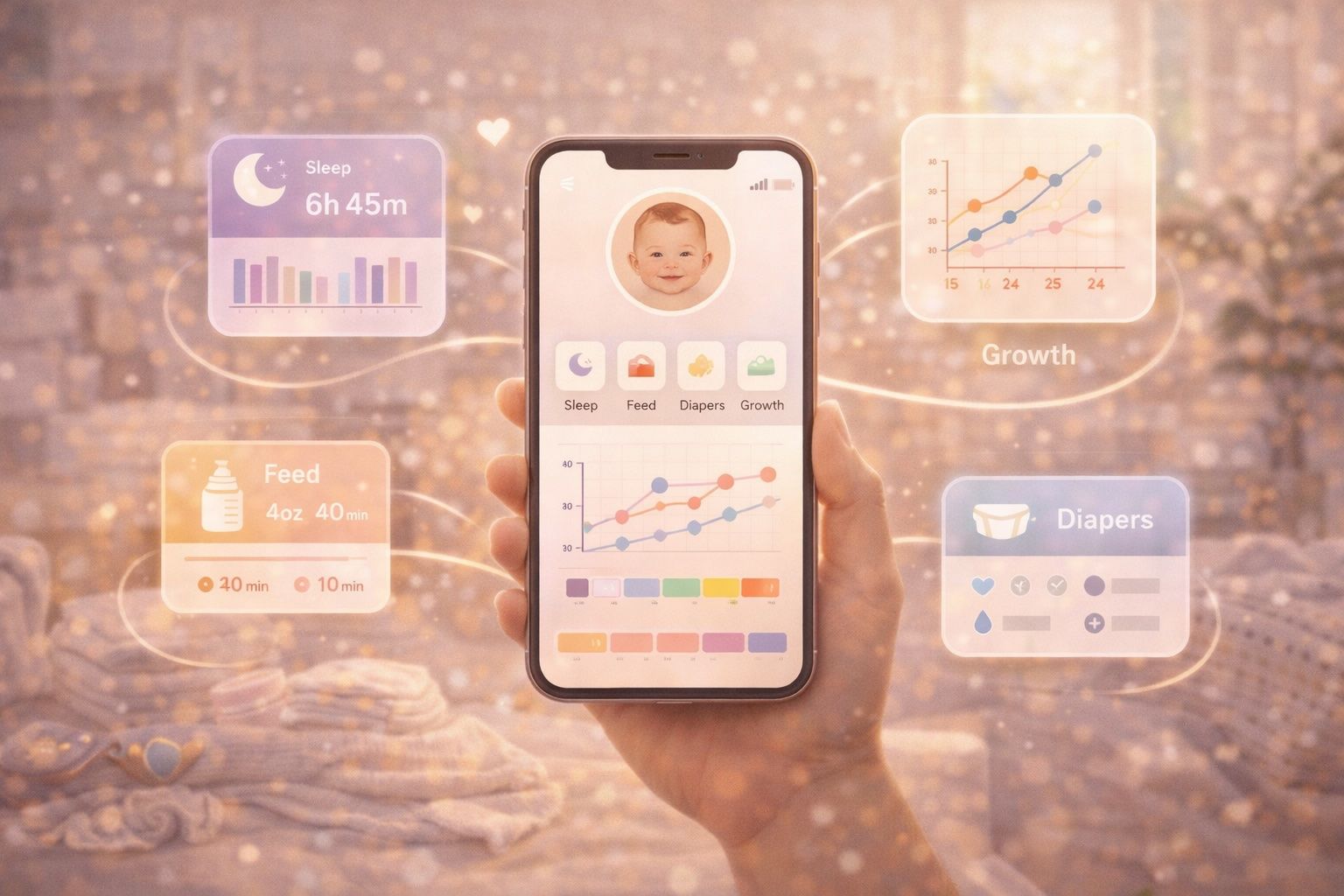
Shift changes between partners become effortless. Instead of a verbal debrief ("She ate around... I think 2? Maybe 3 ounces? And she slept but I'm not sure how long..."), the incoming parent opens the dashboard and sees:
- Last feeding: 4oz formula at 2:15 PM
- Last nap: 1h 20m, ended at 3:30 PM
- Diapers: 3 wet, 1 dirty since morning
- Temperature: 98.4°F at noon — Normal
Full context in seconds.
4. Consistent Pediatric Visits
When both parents track to the same account, whoever takes the baby to the pediatrician has the complete picture — not just the data from "their" shifts. Growth trends, feeding patterns, sleep totals, and temperature history are all in one place.
With Babylitics, you can also generate a secure share link with a QR code so the pediatrician can see the data directly on their own device.
Setting Up Shared Tracking in Babylitics
Getting your partner set up takes about 60 seconds:
Step 1: Invite Your Partner
Go to your baby's profile → Edit → scroll to Collaborators → enter your partner's email. They'll receive an invitation to join.
Step 2: They Accept the Invitation
Your partner creates a Babylitics account (if they don't have one) and accepts the invitation from their dashboard. They don't need their own subscription — your plan covers their access.
Step 3: Both Parents Track
Both of you can now log feedings, sleep, diapers, weight, length, and temperature for the same baby. Every entry is tagged with who recorded it, so you always know who logged what.
You can invite up to 3 collaborators per baby — useful if grandparents or a nanny also help with care.
Who Logged What? The Recorder Badge
Every entry on the metric list views shows a small initials badge next to the timestamp, indicating who recorded it. If your name is Maria, your entries show MA. If your partner is Jorge, theirs show JT.
This isn't about surveillance — it's about context. When you're reviewing the day's data, the badge answers "who was with the baby when this happened?" at a glance. If you see a temperature reading logged by the nanny, you know who to ask for details.
The badge only appears when the baby has at least one collaborator. Solo-tracked babies keep a clean, uncluttered view.
Practical Tips for Partner Tracking
Agree on What to Track
Not everything needs to be logged. Talk with your partner about what matters most for your baby right now:
- First weeks: Focus on feedings (every one), diapers (every one), and weight
- Months 1-3: Add sleep tracking, reduce diaper logging to counts
- Months 3-6: Add solids reactions, reduce feeding detail for established breastfeeders
- 6+ months: Focus on growth (weight/length) and sleep patterns
Use the Same Conventions
Agree on small things that make the data consistent:
- Do you log breastfeeding by total time or per-side time?
- Do you round formula to the nearest ounce or log exact amounts?
- Do you log a nap that's less than 10 minutes?
These don't have a "right" answer — just agree on one approach so the data is comparable.
Don't Use Tracking as a Scorecard
Shared data can become ammunition if you let it. "I logged 5 feedings today and you logged 1" is technically true but misses the point. One parent might have been at work. The other might have done laundry, dishes, and meal prep between feedings.
Use the data for coordination, not competition. If the workload feels unbalanced, have the conversation — but use the data as a starting point, not a verdict.
Take Advantage of the Dashboard
Before asking your partner for an update, check the dashboard first. The daily summary shows today's totals for feedings, sleep, diapers, and the most recent entries. In most cases, the answer to "How was the baby today?" is already there.
Beyond Partners: Extending to Your Care Team
The same collaboration features work for anyone involved in your baby's care:
- Grandparents who babysit regularly can log feedings and diapers
- Nannies or au pairs can track the full day so you have data when you get home
- Night nurses can log overnight feedings and sleep, giving you a complete picture in the morning
Each collaborator sees the same data and their entries are attributed to them via the recorder badge.
Frequently Asked Questions
Invite your partner, share the load, and never ask "did you feed the baby?" again.