
What Temperature Is a Fever in Babies? AAP Guidelines by Age
On this page
Your baby feels warm. You grab the thermometer and see a number — but is it a fever? The answer depends on your baby's age, and the American Academy of Pediatrics (AAP) sets different thresholds for different age groups. Here's exactly what the numbers mean and when to act.
What Temperature Is Considered a Fever in Babies?
The AAP uses 100.4°F (38.0°C) as the clinical baseline for defining a fever. But the temperature that triggers a "call your pediatrician" response rises with your baby's age — and that's the threshold that actually matters for knowing when to act. Babylitics flags readings as fevers using these age-specific AAP thresholds.
A rectal temperature of 100.4°F (38.0°C) is the AAP's clinical baseline for fever. Age-specific "call the doctor" thresholds are higher for older babies.
Normal body temperature for babies ranges from 97.0°F to 100.3°F (36.1°C to 37.9°C). Slight variations throughout the day are expected — temperature is typically lower in the morning and higher in the late afternoon.
What Are the AAP Fever Thresholds by Age?
The urgency of a fever depends heavily on your baby's age. Here's what the AAP recommends:
| Age | Fever Threshold | Action Required |
|---|---|---|
| 0–3 months | 100.4°F (38.0°C) | Call your pediatrician immediately — even if baby seems fine |
| 3–6 months | 100.4°F (38.0°C) | Call your doctor; may need evaluation depending on symptoms |
| 6–24 months | 103°F (39.4°C) | Call your doctor; below this, monitor closely if baby is uncomfortable |
| Over 24 months | 103°F (39.4°C) | Call your doctor; also if fever exceeds 104°F (40°C) or lasts more than 3 days |
For infants under 3 months, any fever of 100.4°F (38.0°C) or higher requires immediate medical evaluation — even if the baby appears well.
The critical rule: for babies under 3 months, any fever is an emergency. Don't wait, don't give medication — call your pediatrician or go to the emergency room.
How Should I Take My Baby's Temperature?
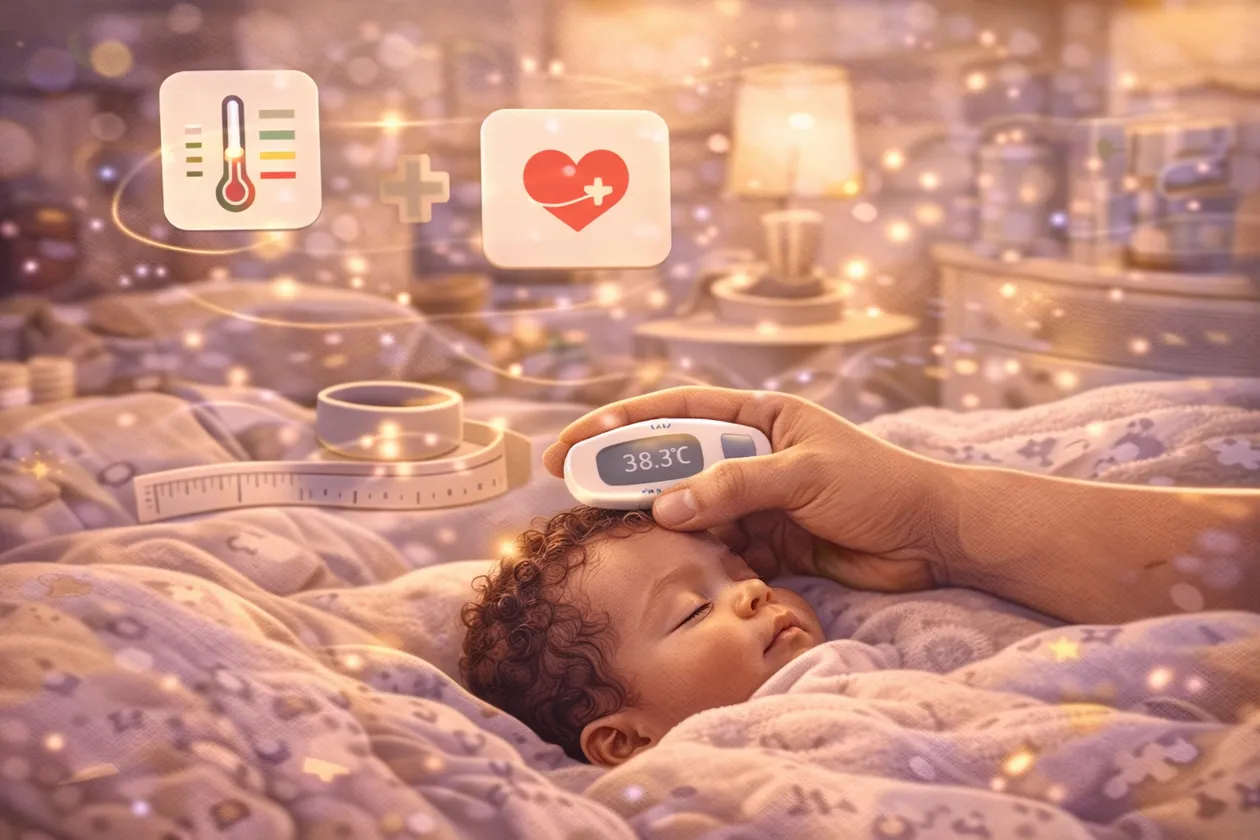
The AAP recommends rectal temperature as the most accurate method for babies under 3 years. Other methods can underestimate or overestimate the actual body temperature.
| Method | Best For | Accuracy |
|---|---|---|
| Rectal | Babies under 3 years | Most accurate |
| Temporal artery (forehead) | Any age | Good screening tool |
| Tympanic (ear) | 6 months and older | Reasonable if done correctly |
| Axillary (armpit) | Screening only | Least accurate — can miss fevers |
Rectal thermometers are considered the gold standard for measuring temperature in infants and young children, according to the AAP.
Tips for rectal temperature:
- Use a digital thermometer with a flexible tip
- Apply a small amount of petroleum jelly
- Insert about half an inch
- Wait for the beep — it typically takes 10–15 seconds
What Counts as a High Fever?
Not all fevers are equal. Babylitics classifies each reading into one of five statuses, tuned to your baby's age:
| Status | What it means |
|---|---|
| Hypothermia | Below 96.8°F (36.0°C) — or below 97.7°F (36.5°C) for babies under 3 months. Call your doctor. |
| Normal | Routine temperature for your baby's age |
| Low-grade fever | Within about 1°F (0.5°C) below your baby's age-specific fever threshold (see table above) |
| Fever | At or above your baby's age-specific fever threshold |
| High fever | 104°F (40°C) or above — a high fever is a high fever at any age. Call your doctor. |
A low-grade fever in an otherwise happy, eating, and sleeping baby is usually not an emergency (unless they're under 3 months). A high fever always warrants a call to your pediatrician.
When Should I Call the Doctor?
Beyond the age-specific thresholds above, call your pediatrician if your baby has a fever and:
- Is unusually lethargic or difficult to wake
- Refuses to eat or drink for more than one feeding cycle
- Has a rash that doesn't blanch (turn white) when pressed
- Has had a seizure (febrile seizures can occur with rapid temperature spikes)
- Has difficulty breathing or is breathing unusually fast
- Has been vomiting or having diarrhea for more than 12 hours
Trust your instincts. If something feels wrong, call — pediatricians expect these calls.
How Can I Track My Baby's Temperature Over Time?
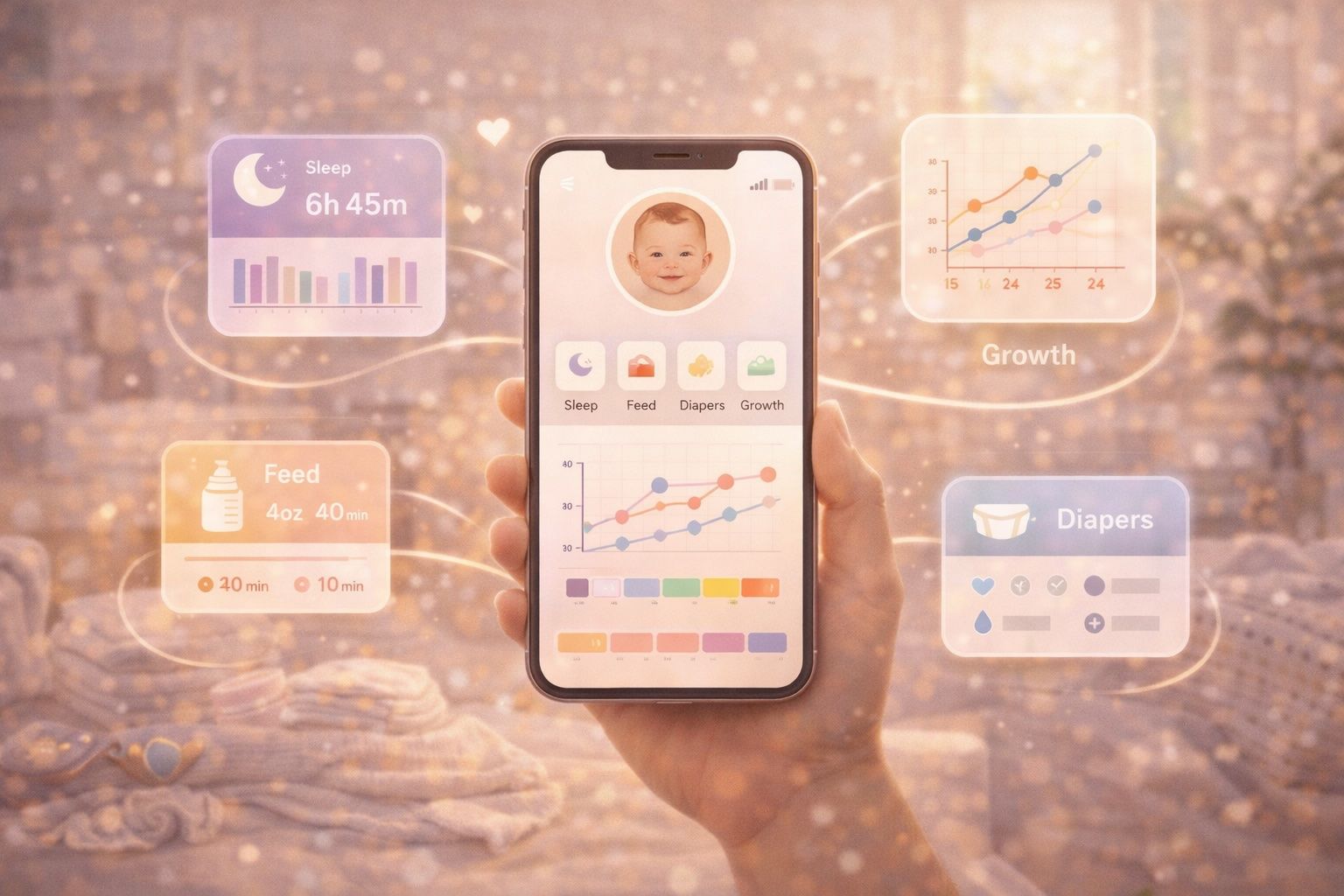
Tracking temperature readings helps you spot trends and gives your pediatrician useful data during sick visits. Babylitics makes this simple:
- Log each reading with the exact temperature and time
- See instant fever status — Normal, Low-grade fever, Fever, or High fever — based on AAP thresholds for your baby's age
- View temperature trends over days and weeks
- Share data with your pediatrician via a secure link or QR code before your visit
When your baby is sick, having a log of readings with timestamps is far more useful than trying to remember from memory.
Frequently Asked Questions
Log your baby's temperature and get instant fever status based on AAP guidelines — free for 15 days, no credit card required.